


“…io sto alla porta e busso” (Ap 3,20 – “…I stand at the door and knock” (Ap 3,20)

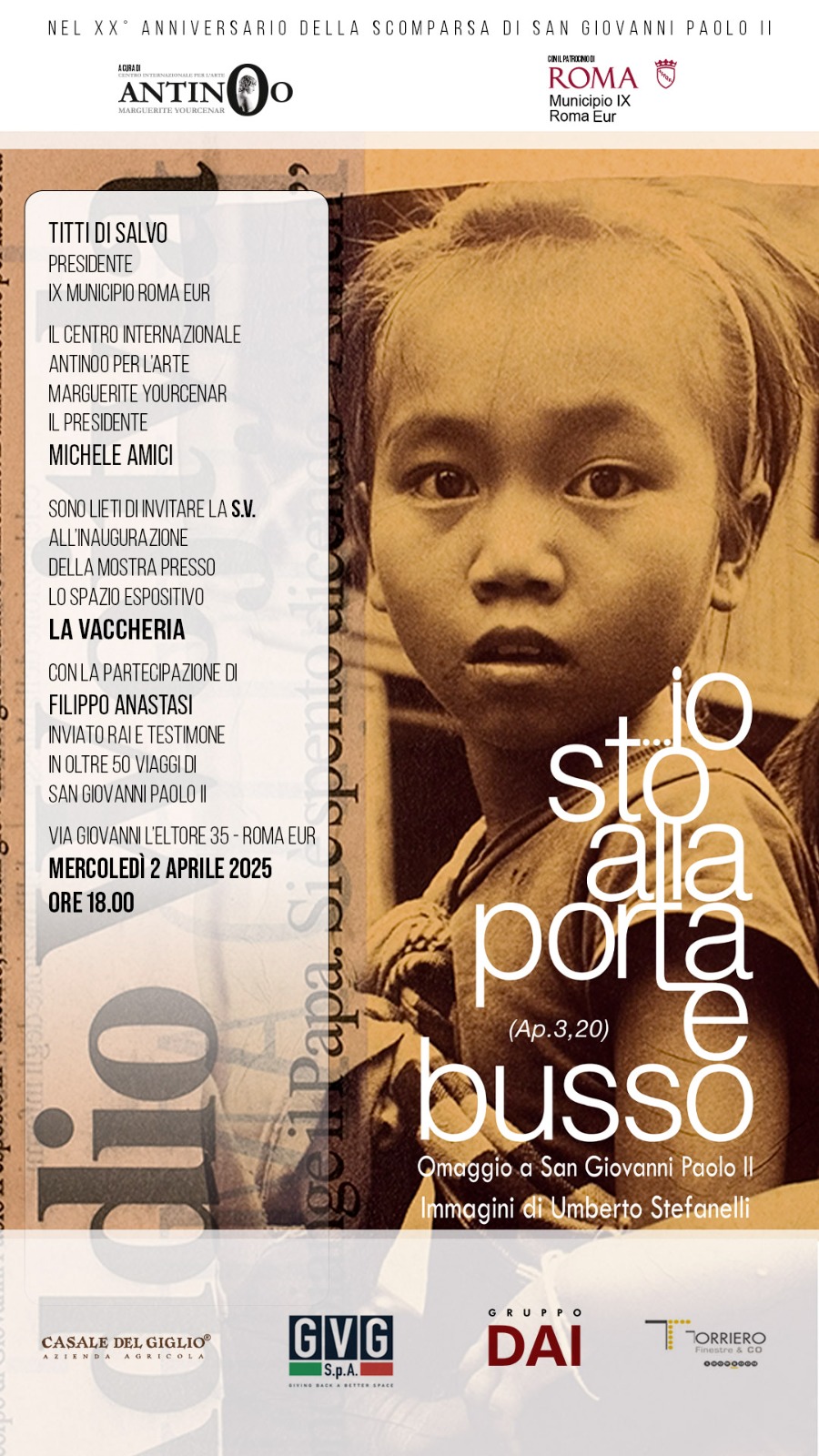
Il Centro Internazionale Antinoo per l’Arte – Documentazione Marguerite Yourcenar, con il patrocinio del IX Municipio Roma Eur di Roma Capitale presenta:

“…io sto alla porta e busso” (Ap 3,20) una mostra di Umberto Stefanelli

La Vaccheria 2 – 20 aprile 2025 – Roma

Un evento artistico originale, carico di simbolismi e di esaltanti emozioni, realizzato da Umberto Stefanelli, con l’intento di rendere omaggio alla carismatica figura di Giovanni Paolo II, attraverso due realtà a lui molto care: il viaggio ed i giovani. Un percorso evangelico multi-etnico tra le nuove generazioni, costantemente alla ricerca di un equilibrato tracciato interiore che completi il fatalistico viaggio della vita. I volti, le intense espressioni dei bambini che Giovanni Paolo II ha “incontrato” durante la sua missione pastorale nel mondo. Una sorta di flash-back fotografico, contemporaneo all’annuncio della scomparsa del Pontefice. Un itinerario che accompagna brani di storia ed episodi rilevanti, nel lungo pontificato di Papa Wojtyla. La mostra si compone di 40 pezzi ed è il risultato di una perfetta fusione tra arte e tecnica…un ponte immaginario, una rilevante eredità per il nuovo Pontefice.
Ecco, io sto alla porta e busso, se qualcuno ode la mia voce ed apre la porta, io entrerò da lui, e cenerò con lui ed egli con me.

Immagini: Umberto Stefanelli
Curatori: Michele Amici e Laura Monachesi
Project Manager: Sergio Emiliano
Editor Grafica Digitale: Carmine di Stefano
Allestimenti: Chiara e Massimo Domenicucci
Ufficio Stampa e Comunicazione: Stella Maresca Riccardi

ENGLISH

The Antinoo International Center of Art – Marguerite Yourcenar’s documentation, under the patronage of the 9th Municipality Eur Rome of Rome Capital, presents:

“…I stand at the door and knock” (Ap 3,20) an Umberto Stefanelli’s exhibition.

La Vaccheria 2 – 20 aprile 2025 – Rome

An original artistic event, filled with emotion and symbolism, has been realized by Umberto Stefanelli, with the intent of paying homage to the charismatic figure of Pope John Paul ll, adopting two themes very dear to the late Pope: travelling and the younger generation. An evangelic multi-ethnical journey throughout the new generations, constantly in search of an interior harmonious path, in which to complete the fatalistic journey that is life. The faces, the intense expressions of the children that Pope John Paul ll “met” during his pastoral mission around the world. A kind of photographic flash back realized at the time of the announcement of the Pope’s death. An itinerary which accompanies articles of history and relevant episodes during the long reign of Pope Wojtyla.
The exhibition consists of 40 pieces of work and is the result of a perfect fusion between art and technique…an imaginary bridge, an important inheritance for the new Pontefice.
I stand at the door and knock. If anyone hears my voice and opens the door, then I will come in to him, and will dine with him and he with me.

Images: Umberto Stefanelli
Curators: Michele Amici and Laura Monachesi
Project Manager: Sergio Emiliano
Graphic Design: Carmine di Stefano
Set-up: Chiara and Massimo Domenicucci
Press Office: Stella Maresca Riccardi

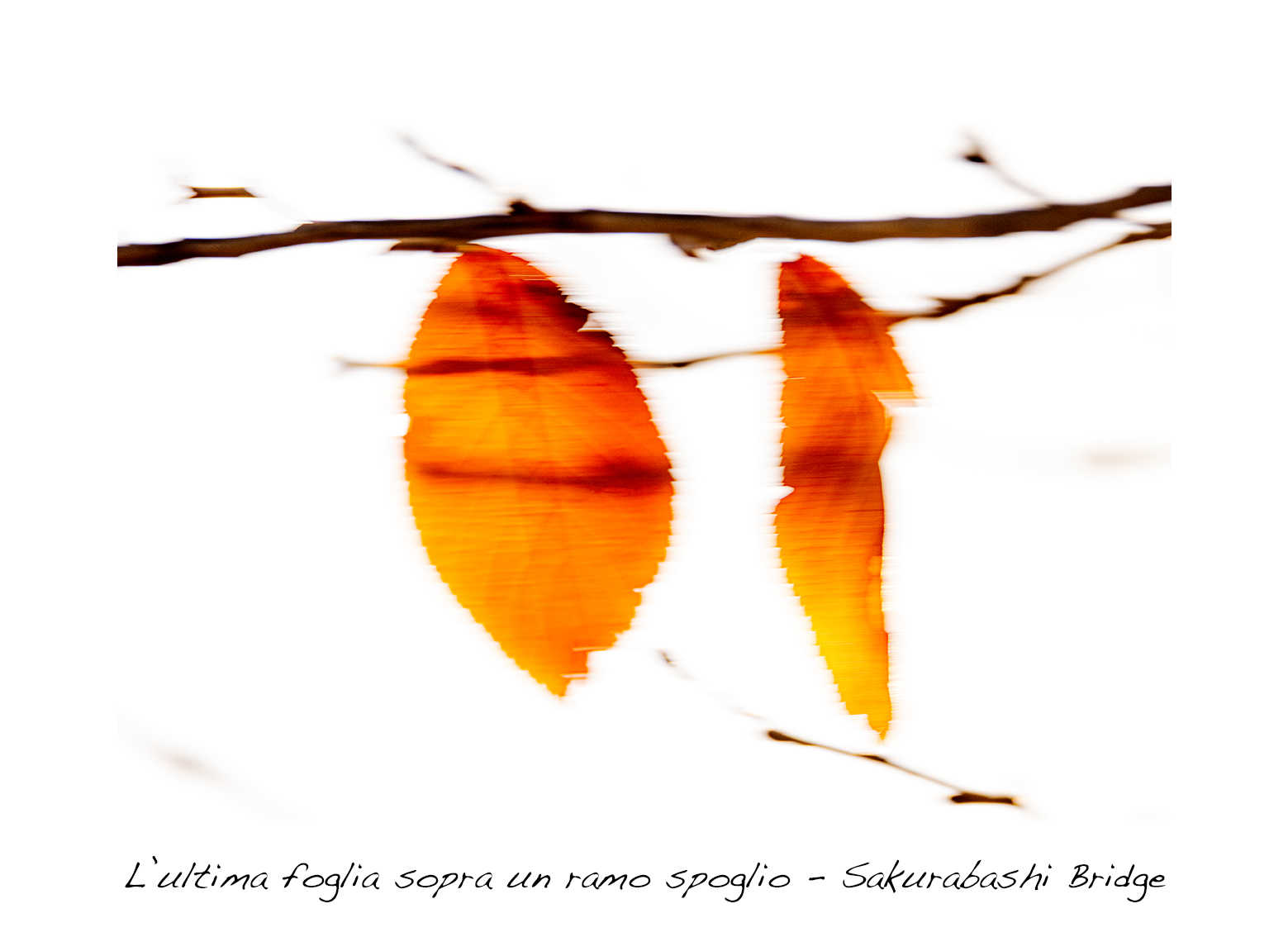
L’ultima foglia sopra un ramo spoglio – The last leaf on a bare branch

I giorni volano via malinconicamente in questa primavera di morbide foglie autunnali. Rimembranze sovrapposte fino a scomparire.

Isole sperdute, oceani stesi al sole e Crisalidi d’Aria.

Fraintendimenti, solitudine e poesia assassinata nello spazio crudele d’un “è stato bello… finché è durato.”

ENGLISH

Days drift away wistfully in this spring of soft autumn leaves. Memories overlapped until faded.

Godforsaken islands, sun-drenched oceans and Air Chrysalises.

Misunderstandings, solitude and poetry murdered within the cruel space of an “it was beautiful… till it lasted.”

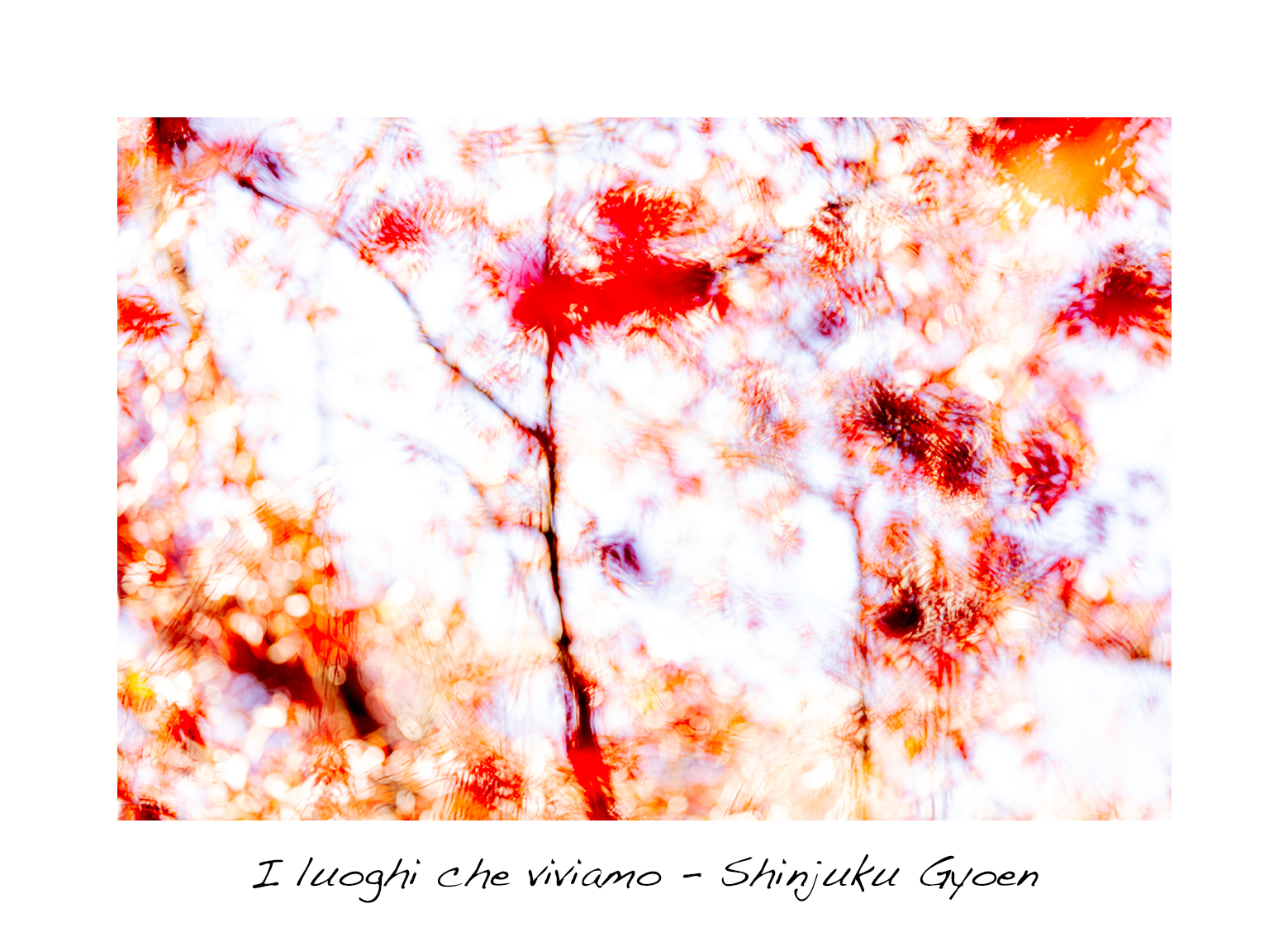
I luoghi che viviamo – The places we live in

Siamo i luoghi che viviamo.
Elementi indissolubili che ci appartengono così come noi apparteniamo a loro.

Dimore di cuore e sentimento, territori di qui e adesso.
Consistenza eterea, piaceri ancestrali e desideri realizzati.

ENGLISH

We are the places we live in.
Perpetual elements which belong to us, just as we belong to them.

Lodgings of heart and feeling, lands of here and now.
Ethereal substance, ancestral pleasures and fulfilled desires.

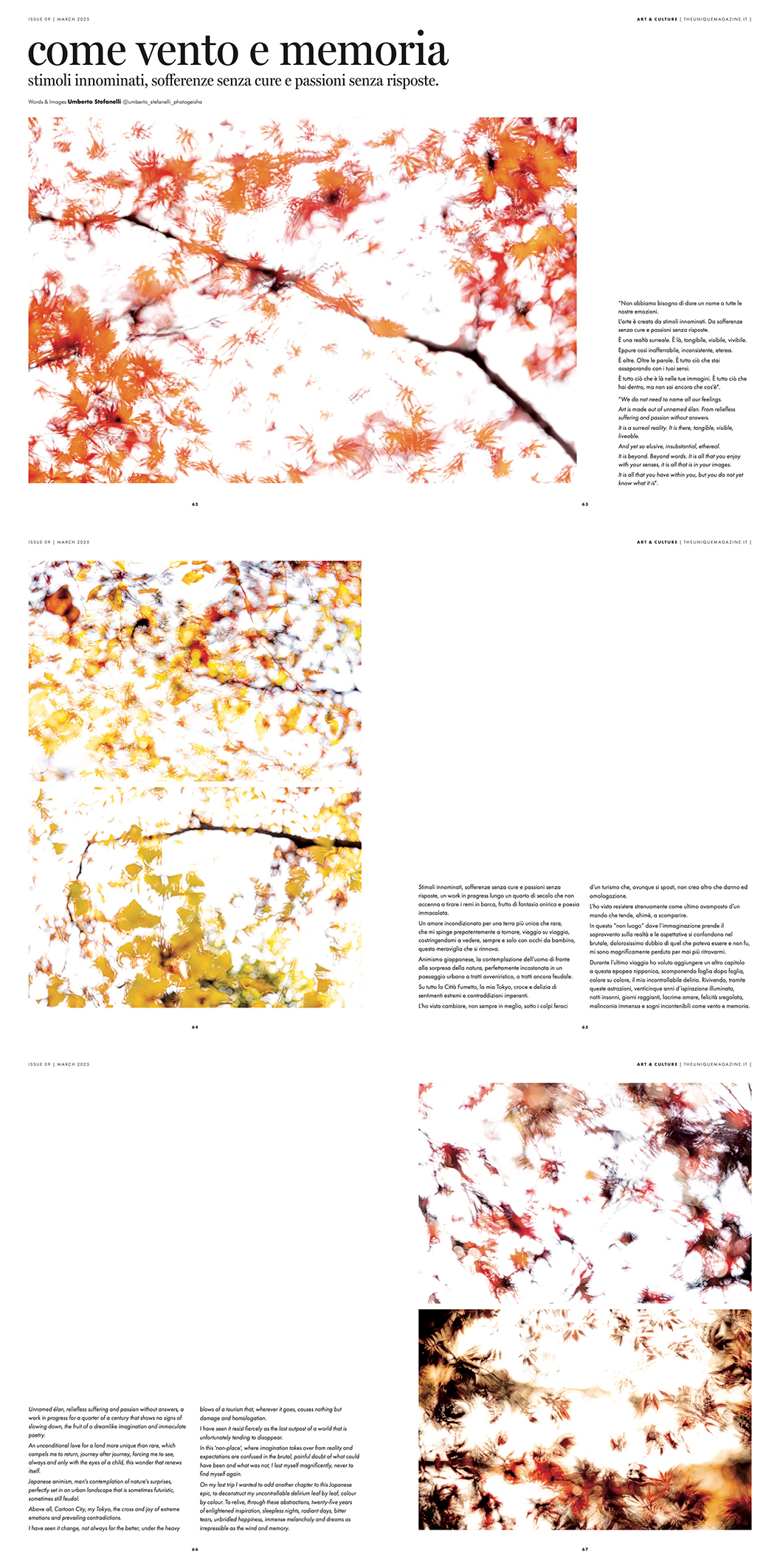
Come vento e memoria – Like wind and memory

Umberto Stefanelli per TheUnique Magazine
https://www.theuniquemagazine.it

“Non abbiamo bisogno di dare un nome a tutte le nostre emozioni.
L’arte è creata da stimoli innominati. Da sofferenze senza cure e passioni senza risposte.
E’ una realtà surreale. E’ là, tangibile, visibile, vivibile.
Eppure così inafferrabile, inconsistente, eterea.
E’ oltre. Oltre le parole. E’ tutto ciò che stai assaporando con i tuoi sensi.
E’ tutto ciò che è là nelle tue immagini. E’ tutto ciò che hai dentro, ma non sai ancora che cos’è”.

Stimoli innominati, sofferenze senza cure e passioni senza risposte, un work in progress lungo un quarto di secolo che non accenna a tirare i remi in barca, frutto di fantasia onirica e poesia immacolata.

Un amore incondizionato per una terra più unica che rara, che mi spinge prepotentemente a tornare, viaggio su viaggio, costringendomi a vedere, sempre e solo con occhi da bambino, questa meraviglia che si rinnova.

Animismo giapponese, la contemplazione dell’uomo di fronte alla sorpresa della natura, perfettamente incastonata in un paesaggio urbano a tratti avveniristico, a tratti ancora feudale.

Su tutto la Città Fumetto, la mia Tokyo, croce e delizia di sentimenti estremi e contraddizioni imperanti.
L’ho vista cambiare, non sempre in meglio, sotto i colpi feroci d’un turismo che, ovunque si sposti, non crea altro che danno ed omologazione.
L’ho vista resistere strenuamente come ultimo avamposto d’un mondo che tende, ahimè, a scomparire.

In questo “non luogo” dove l’immaginazione prende il sopravvento sulla realtà e le aspettative si confondono nel brutale, dolorosissimo dubbio di quel che poteva essere e non fu, mi sono magnificamente perduto per mai più ritrovarmi.

Durante l’ultimo viaggio ho voluto aggiungere un altro capitolo a questa epopea nipponica, scomponendo foglia dopo foglia, colore su colore, il mio incontrollabile delirio. Rivivendo, tramite queste astrazioni, venticinque anni d’ispirazione illuminata, notti insonni, giorni raggianti, lacrime amare, felicità sregolata, malinconia immensa e sogni incontenibili come vento e memoria.

ENGLISH

“We do not need to name all our feelings.
Art is made out of unnamed élan. From reliefless suffering and passion without answers.
It is a surreal reality. It is there, tangible, visible, livable.
And yet so elusive, insubstantial, ethereal.
It is beyond. Beyond words. It is all that you enjoy with your senses.
It is all that is in your images. It is all that you have within you, but you do not yet know what it is”.

Unnamed élan, reliefless suffering and passion without answers, a work in progress for a quarter of a century that shows no signs of slowing down, the fruit of a dreamlike imagination and immaculate poetry.

An unconditional love for a land more unique than rare, which compels me to return, journey after journey, forcing me to see, always and only with the eyes of a child, this wonder that renews itself.

Japanese animism, man’s contemplation of nature’s surprises, perfectly set in an urban landscape that is sometimes futuristic, sometimes still feudal.

Above all, Cartoon City, my Tokyo, the cross and joy of extreme emotions and prevailing contradictions.
I have seen it change, not always for the better, under the heavy blows of a tourism that, wherever it goes, causes nothing but damage and homologation.
I have seen it resist fiercely as the last outpost of a world that is unfortunately tending to disappear.

In this “non-place”, where imagination takes over from reality and expectations are confused in the brutal, painful doubt of what could have been and what was not, I lost myself magnificently, never to find myself again.

On my last trip I wanted to add another chapter to this Japanese epic, to deconstruct my uncontrollable delirium leaf by leaf, color by color. To relive, through these abstractions, twenty-five years of enlightened inspiration, sleepless nights, radiant days, bitter tears, unbridled happiness, immense melancholy and dreams as irrepressible as the wind and memory.

Eyes behind the window

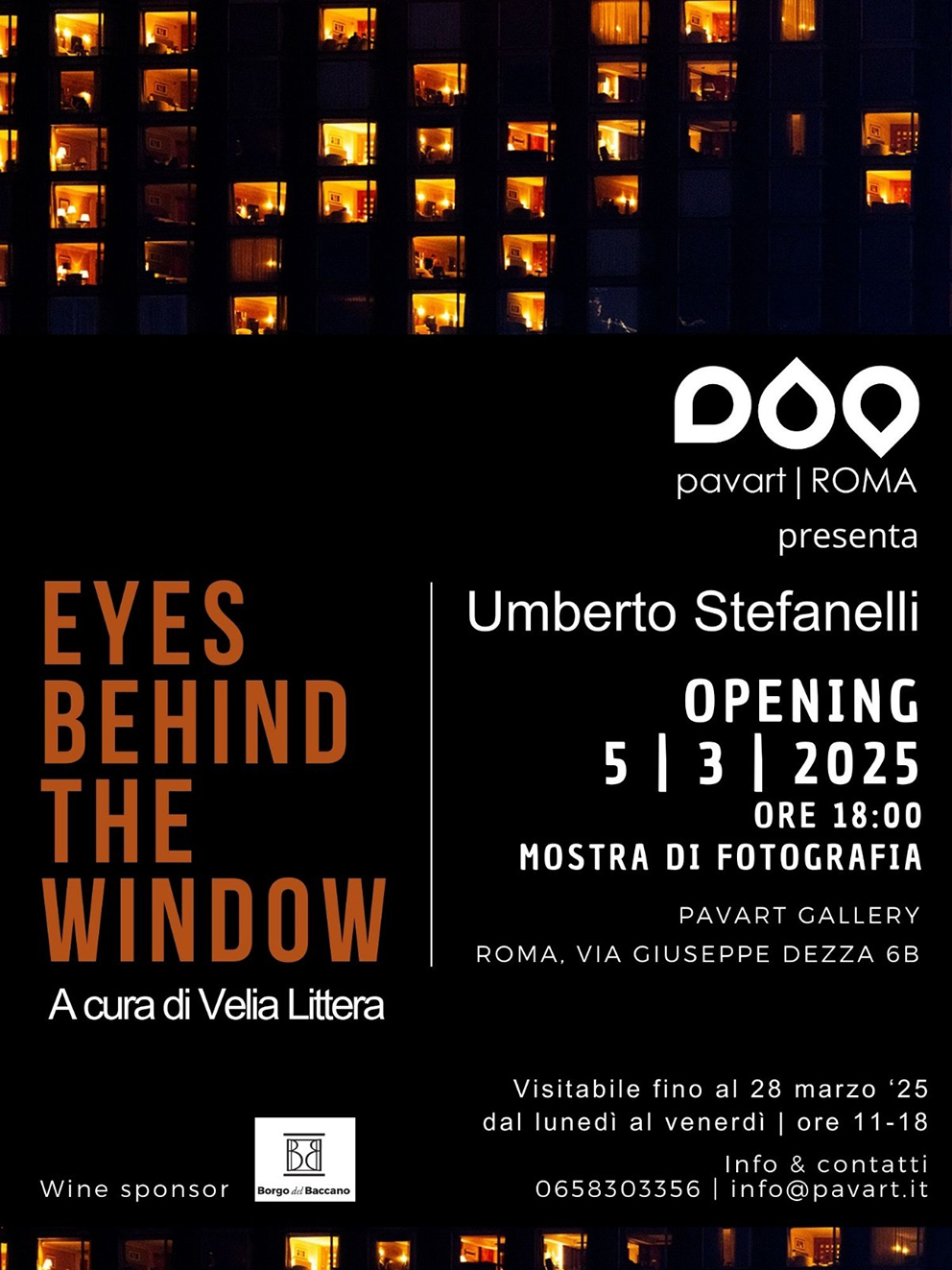
Roma, 5 marzo 2025, Pavart Gallery inaugura la mostra personale di fotografia di Umberto Stefanelli dal titolo “EYES BEHIND THE WINDOW” curata da Velia Littera.

“Vorrei andare oltre l’apparenza di queste centomila e più maschere pirandelliane. Scavare tra perplessità, convinzioni e consuetudini sospese su un tempo d’opprimente modernità.” (Umberto Stefanelli)

La mostra fotografica “Eyes behind the window” di Umberto Stefanelli ci invita a scoprire il mondo dietro le superfici trasparenti e opache delle facciate urbane che si trasformano in quadri visivi. Le immagini scattate da Stefanelli svelano una complessità che va oltre la dimensione architettonica: ogni scatto è un racconto sospeso tra l’astratto e il concreto, tra il reale e l’immaginato.

La tecnica fotografica adottata da Umberto Stefanelli nelle opere di questa mostra si distingue per la sua capacità di trasformare la realtà architettonica in una composizione pittorica. Attraverso un accurato studio delle linee, dei colori e delle simmetrie, Stefanelli cattura in ogni scatto la struttura ripetitiva delle facciate, riducendole a pattern geometrici che evocano l’astrazione tipica della pittura contemporanea.

Un elemento fondamentale del suo approccio tecnico è l’uso di una luce naturale diffusa, che accentua i contrasti cromatici senza annullare la morbidezza visiva complessiva. La scelta di inquadrature perfettamente frontali amplifica il senso di astrazione, eliminando ogni profondità prospettica e concentrando l’attenzione sul ritmo visivo delle finestre e dei pannelli.

Stefanelli sfrutta anche il potenziale narrativo del dettaglio: le tende appena visibili, i riflessi sulle superfici vetrate, o un’apertura casuale, diventano frammenti di storie umane celate dietro la rigidità dell’architettura.
Questa combinazione di precisione tecnica e sensibilità artistica è il fulcro del linguaggio visivo di Stefanelli, capace di trasportare l’osservatore in un dialogo tra realtà e immaginazione. Le fotografie in mostra rivelano una profonda influenza della pittura astratta. La geometria delle finestre e delle facciate diventano una tela sulla quale si intrecciano colori, linee e riflessi.

Il tema centrale della mostra è la relazione tra l’interno e l’esterno, tra l’individuo e il collettivo. Le finestre sono barriere, ma anche punti di contatto. Dietro ognuna si nasconde una storia, un frammento di vita che l’osservatore è invitato a immaginare. Questa tensione tra ciò che si mostra e ciò che rimane celato è amplificata dall’estetica pittorica delle fotografie, che invita lo spettatore a perdersi nei dettagli.

La mostra “Eyes behind the window” è una meditazione sulla città come spazi di contrasto, dove l’anonimato delle architetture si intreccia con l’unicità delle vite umane.
Le immagini di Stefanelli ci ricordano che, anche nel cuore del caos urbano, c’è bellezza, c’è storia, c’è arte.

ENGLISH

Rome, March 5th 2025, Pavart Gallery opens the solo photography exhibition by Umberto Stefanelli entitled “EYES BEHIND THE WINDOW” curated by Velia Littera.

“I would like to go beyond the appearance of these hundred thousand and more Pirandello’s masks. Digging through perplexity, beliefs and practises suspended in a time of oppressive modernity.” (Umberto Stefanelli)

The photographic exhibition “Eyes behind the window” by Umberto Stefanelli invites us to discover the world behind the transparent and opaque surfaces of urban facades that are transformed into visual paintings. The images shot by Stefanelli reveal a complexity that goes beyond the architectural dimension, each shot is a story suspended between the abstract and the concrete.

The photographic technique adopted by Umberto Stefanelli in the photographs of this exhibition is distinguished by his ability to transform architectural reality into a pictorial composition. Through a careful study of lines, colours and symmetries, Umberto Stefanelli captures in each shot the repetitive structure of the facades, reducing them to geometric patterns that evoke the typical abstraction of contemporary paintings.

A fundamental element of his technical approach is the use of diffuse natural light, which accentuates colour contrasts without cancelling the overall visual smoothness. The choice of perfectly frontal framings amplifies the sense of abstraction, eliminating any perspective depth and focusing attention on the visual rhythm of the windows and the panels.

Stefanelli also uses the narrative potential of detail, barely visible curtains, reflections on glass surfaces or random apertures become fragments of human stories hidden behind the rigidity of architecture. This combination of technical precision and artistic sensitivity is the core of Stefanelli’s visual language, capable of transporting the observer into a dialogue between reality and imagination. The geometry of windows and facades becomes a canvas on which colours, lines and reflections are interwoven.

The central theme of the exhibition is the relationship between the inside and the outside, between the individual and the collective. Windows are barriers, but also points of contact. Behind each of them lies a story, a fragment of life that the observer is invited to imagine. This tension between what is shown and what remains hidden is amplified by the pictorial aesthetics of the photographs, which invites the viewer to lose himself in the details.

The exhibition “Eyes behind the window” is a meditation on the city as spaces of contrast, where the anonymity of the architecture is connected with the uniqueness of human lives.
Stefanelli’s images remind us that, even in the heart of urban chaos, there is beauty, there is history, there is art.

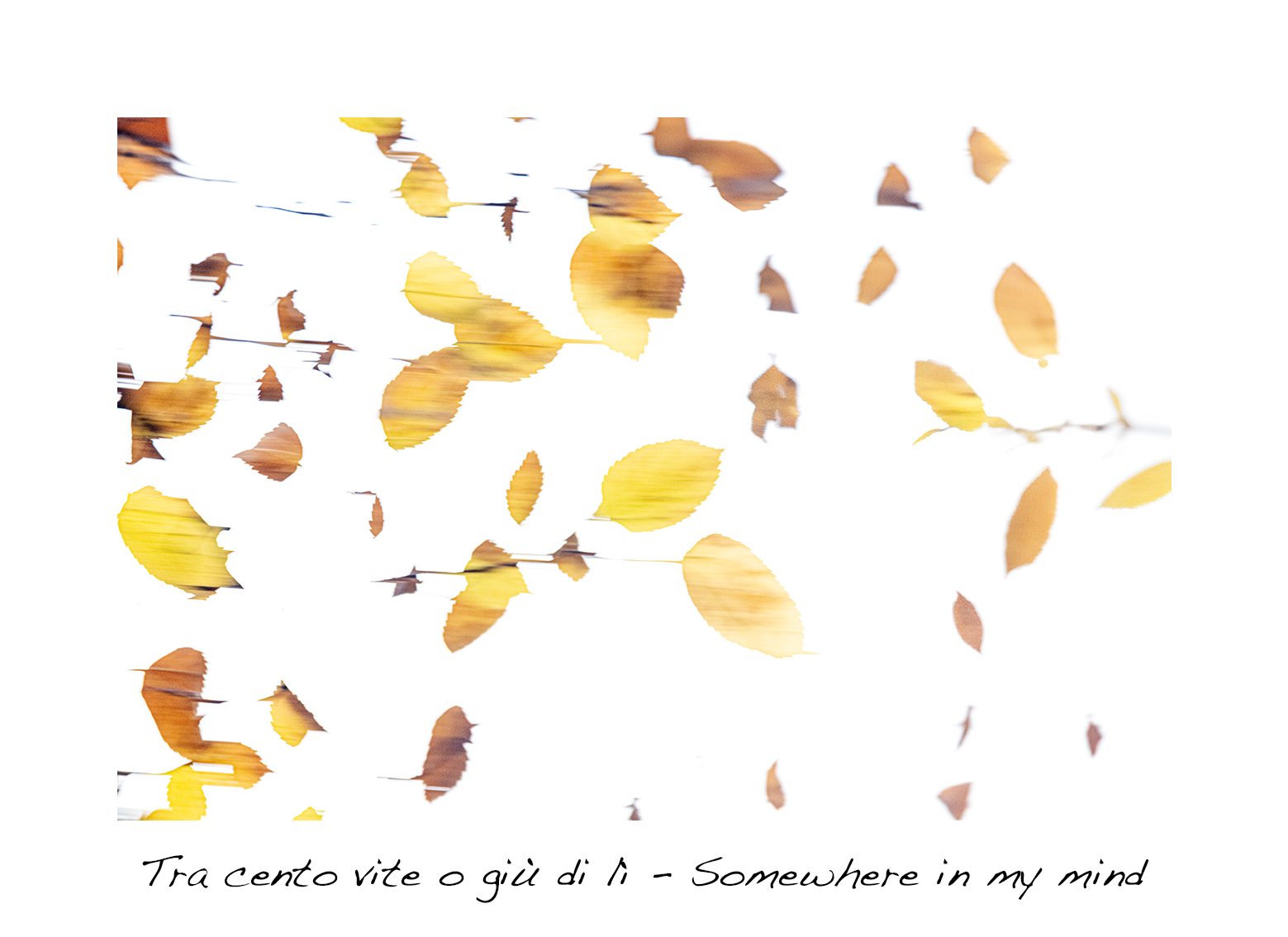
Tra cento vite o giù di lì – In a hundred lives or so

“Ti chiamerò da un autogrill, tra cento vite o giù di lì”, canta Achille Lauro nella ballata metropolitana “Incoscienti giovani”.

Il testo m’ha riportato alla memoria questa rapsodia in bianco screziata di foglie e vento. Una passione struggente, incosciente e giovane.

Un amore intenso e tormentato, con un riferimento temporale che guarda ben oltre l’infinito.

Cento vite o giù di lì, tante vorrei averne anch’io, per lasciarmi andare come foglia a questa rapsodia in bianco screziata di foglie e vento.

ENGLISH

“I will call you from a gas station, in a hundred lives or so”, sings Achille Lauro in the urban ballad “Reckless youths”.

The lyrics summon back to me this rhapsody in white streaked with leaves and wind. A passion aching, reckless, and young.

A love both fervent and tormented, with a sense of time that stretches far beyond infinity.

A hundred lives or so. I, too, would wish for as many, to surrender like a leaf to this rhapsody in white streaked with leaves and wind.

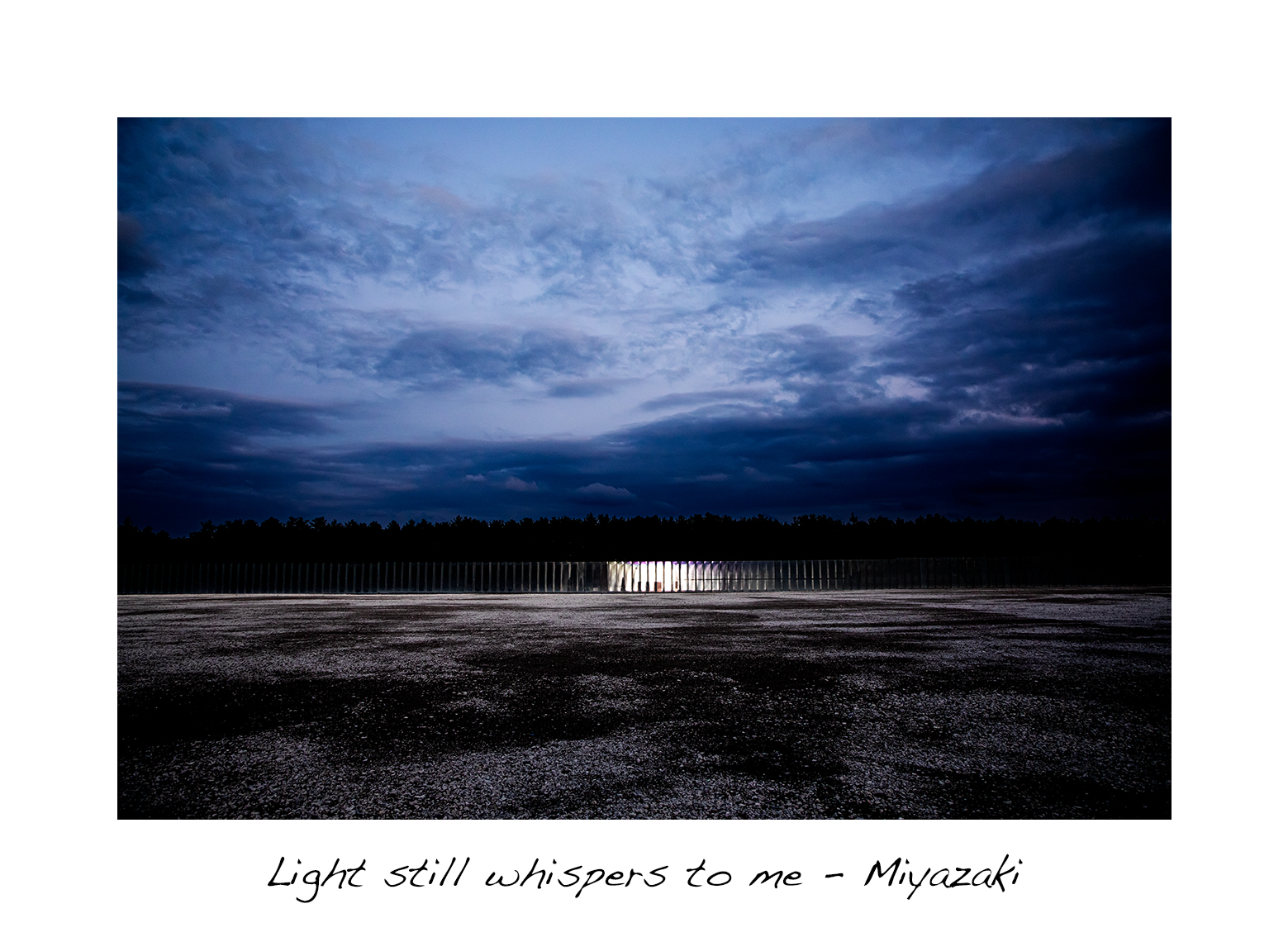
Mi sussurra ancora la luce – Light still whispers to me

Mi sussurra ancora la luce ed a lei mi aggrappo in questo momento delicato d’affanno e riflessione.

La vedo, come bagliore, sorridere al blu effimero dell’imbrunire, riverbero esile di faro che mi guida verso l’oscura densità della notte.

Mentre continuo ad immaginare oasi sudamericane e quell’isola “hecha de luz, de sal, de piedra y pensamiento”.

ENGLISH

Light still whispers to me, and to it I cling in this delicate moment of breathlessness and reflection.

I see it, like a glow, smiling at the ephemeral blue of the dusk, a slender reverberation of a lighthouse guiding me toward the dark density of the night.

As I go on envisioning South American oases and that island “made of light, of salt, of stone and of thought.”

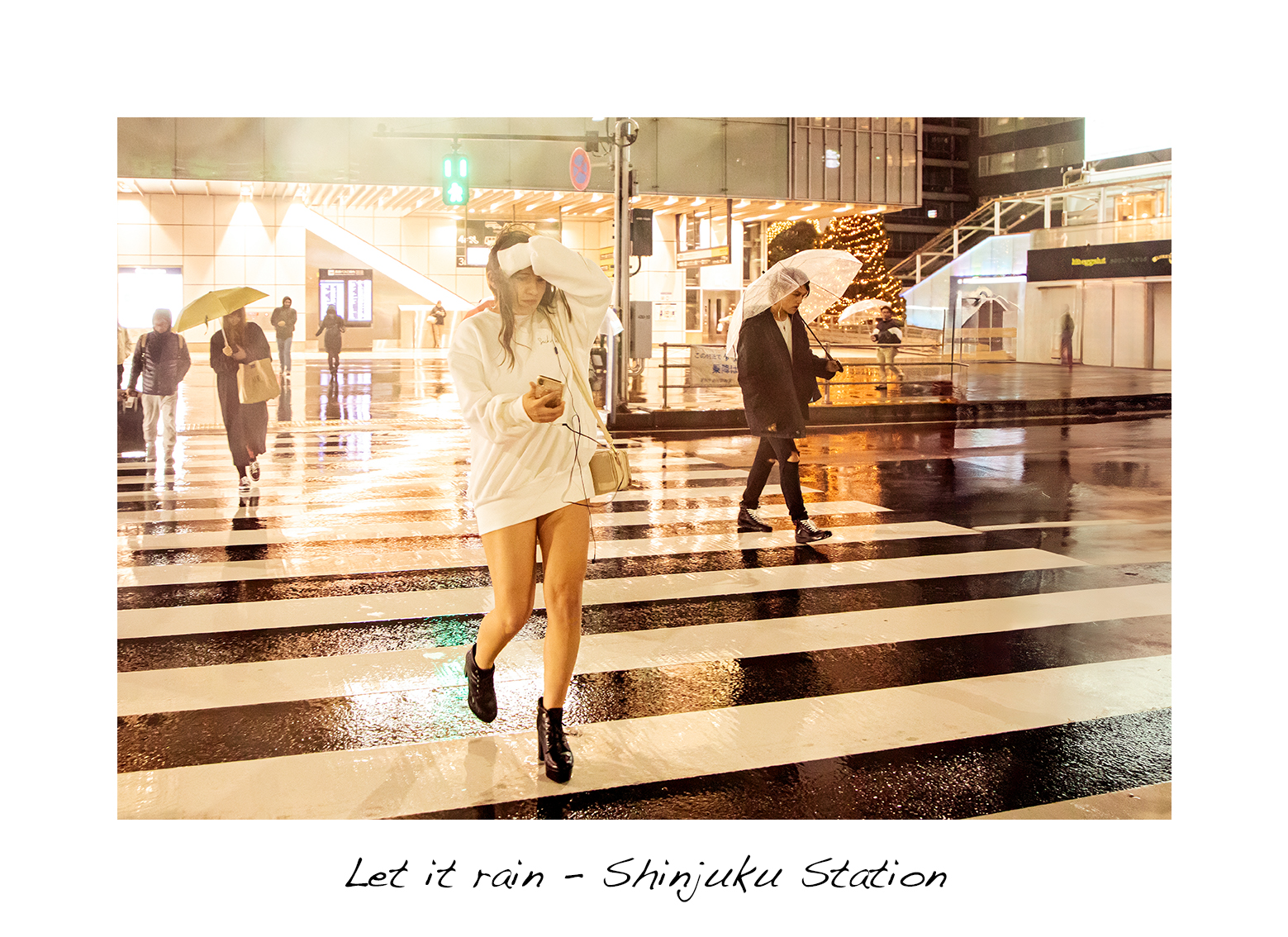
Let it rain

Giorni di pioggia, bianco, gambe nude ed irriverenti tentazioni.
Un ritmo testardo d’estremo oriente e passi bagnati in stazioni dove siamo nient’altro che numeri, lasciati cadere un po’ per caso sulla via di ritorno verso casa.

ENGLISH

Days of rain, white, bare legs, and cheeky temptations.
A stubborn rhythm of the Far East and wet steps in stations where we are nothing but numbers, dropped a bit by chance along the way back home.